Archive
VERDEinMED project enters a new phase of transferring circular textile solutions across the Mediterranean
The transition to a circular economy in the textile sector continues to represent a major challenge across the Mediterranean. Although new regulatory requirements and growing environmental awareness are accelerating change, many territories still need practical tools, better coordination and technical support to translate circular economy ambitions into concrete action.
Building on the results achieved during the first phase, the VERDEinMED – PreVEnting and ReDucing the tEXtiles waste mountain in the MED area project is now moving from testing to the transfer of solutions, bringing tested solutions to new territories and supporting their integration into local and regional ecosystems.
Co-funded by the Interreg Euro-MED Programme under its Innovative Sustainable Economy Mission, VERDEinMED has developed and tested an integrated approach that helps public institutions, businesses, waste management actors and support organisations move towards a more sustainable and circular textile sector.
From testing solutions to transferring them
During the initial phase, VERDEinMED developed and tested a comprehensive Support Service for circular textiles, complemented by the Knowledge Platform and regional VERDE Hubs, which bring together relevant stakeholders.
The Support Service has already demonstrated its potential through pilot activities involving different stakeholders along the textile value chain. The project is now moving to the next step: adapting these solutions to new territorial contexts and supporting organisations in integrating them into their own policies, services and operational practices.
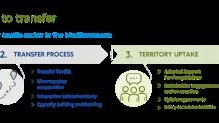
The new Transfer Phase will be based on a giver–receiver approach. Partners with experience in developing and testing VERDEinMED solutions will transfer their knowledge and methodologies to organisations and territories, which will then adapt and implement them in line with their specific challenges and needs.
What will VERDEinMED do during the Transfer Phase?
The project will focus on four interconnected areas:
1. Transfer and adaptation of the VERDEinMED Support Service
Partner organisations will work together to adapt the Support Service to different territorial, institutional and market contexts, enabling its practical application beyond the original pilot territories.
2. Development of the Transfer Toolkit
VERDEinMED will provide practical guidance for transferring its solutions, defining ways to adapt them to policy, operational and market contexts and facilitating their replication in other Mediterranean territories.
3. Strengthening capacities and local ecosystems
Capacity-building and training activities will enable public institutions, clusters, innovation actors and other relevant organisations to acquire the knowledge and skills needed to implement circular solutions in the textile sector. VERDE Hubs will support this process by connecting relevant stakeholders and facilitating cooperation and the co-creation of solutions at territorial level.
4. Supporting the long-term uptake and implementation of solutions
The transfer process will result in tailored guidelines for the Support Service, agreements on the uptake and implementation of solutions, and public policy recommendations aimed at ensuring that the transferred solutions are integrated into institutional and operational practices beyond the end of the project.
Knowledge connecting territories
The VERDEinMED Knowledge Platform will play a central role throughout this process. As the project’s digital environment for knowledge exchange, the platform will provide access to resources and tools while supporting cooperation and knowledge transfer between the territories participating in the project.
By combining this digital dimension with the territorial work of the VERDE Hubs, VERDEinMED creates a framework in which experiences can be shared, adapted and transformed into solutions relevant to the local context.
Who will benefit?
The Transfer Phase is designed to benefit the entire textile circularity ecosystem:
Public institutions will gain tools and knowledge to support evidence-based policymaking and the implementation of circular textile strategies, including new Extended Producer Responsibility (EPR) frameworks.
SMEs and industry stakeholders will benefit from stronger support systems and improved access to circular business models and value chain cooperation.
Waste management operators and Producer Responsibility Organisations (PROs) will benefit from better coordination and approaches that support more efficient circular systems.
Clusters, innovation actors and support organisations will strengthen their capacities to act as intermediaries and facilitators of the circular transition.
From pilot experience to long-term impact
The new phase of VERDEinMED represents a shift from experimentation to institutionalisation.
Rather than starting from scratch, the project builds on solutions that have already been developed and tested, focusing on adapting and using them in different contexts. Through transnational cooperation, territories with different levels of development and experience will be able to exchange experiences, learn from one another and adapt shared solutions to their own needs and circumstances.
In this way, VERDEinMED seeks to transform successful project results into lasting tools, services and cooperation mechanisms that will continue to support the circular transition of the textile sector across the Mediterranean in the long term.
SERDA is the partner transferring the experience of this project to Bosnia and Herzegovina.