Archive
SERDA at the third interregional exchange of experience of the ICONIC project in Spain
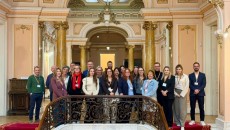
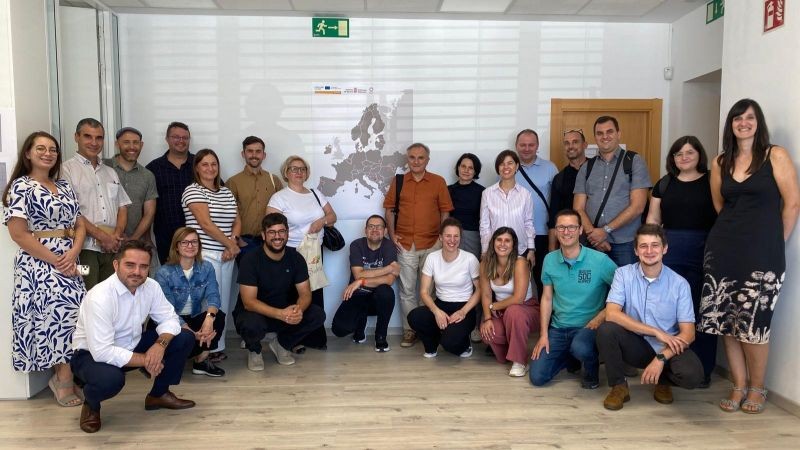
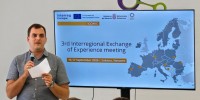
Representatives of the Sarajevo Economic Region Development Agency SERDA and the Ministry of Transport of Sarajevo Canton participated in the third interregional exchange of experience of the ICONIC project, held from 15 to 17 September 2026 in the Sakana region, Navarre, Spain.
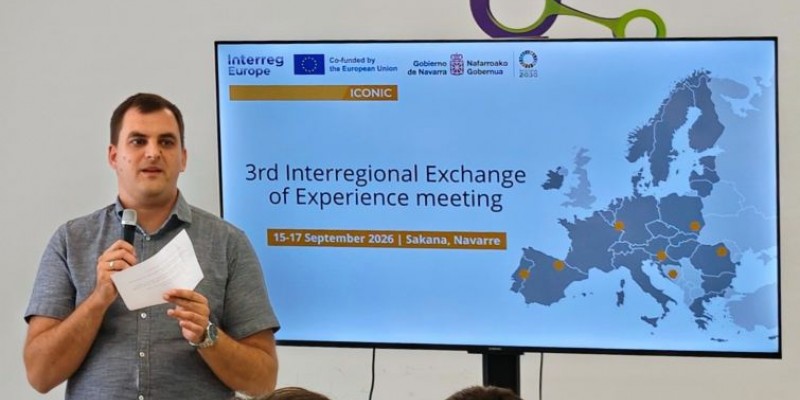
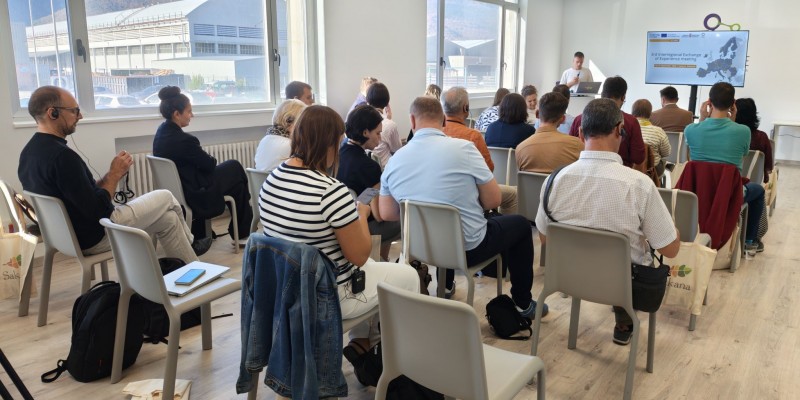
During three intensive days, representatives of the European partner regions exchanged experiences, analysed models for identifying the mobility needs of the population, presented good practices, and participated in workshops and study visits.
Day one – mobility analysis and experiences from Navarre
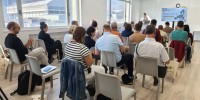
The first day of the event was held at the Dinabide coworking space in Irurtzun, where representatives of the Sakana Development Agency and the Sakana Commonwealth presented the socio-economic context of the region.
Representatives of the Directorate-General for Transport and Sustainable Mobility of Navarre presented the regional legal framework and the principles of mobility policy implementation, followed by a presentation of the results of a detailed mobility analysis conducted in the Sakana area.
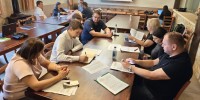
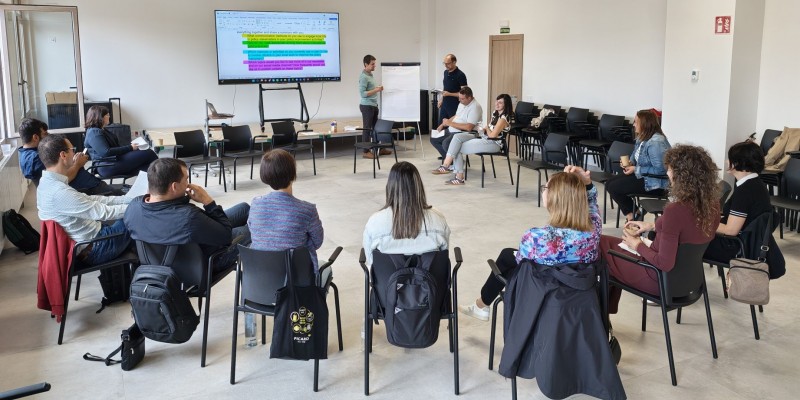
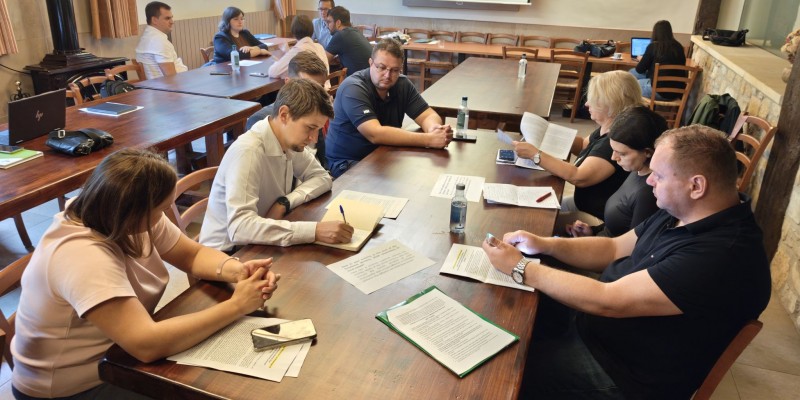
Interactive workshops were then organised in smaller groups, during which the partners compared the experiences of their regions, methods for analysing the needs of the population, mobility patterns, and approaches to identifying target groups.
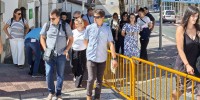
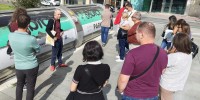
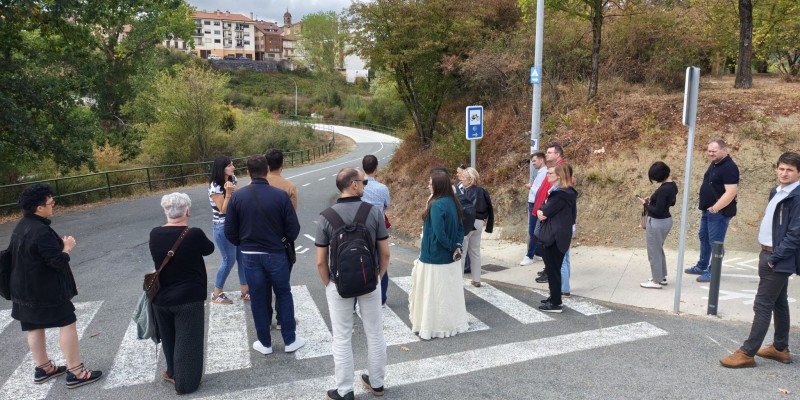
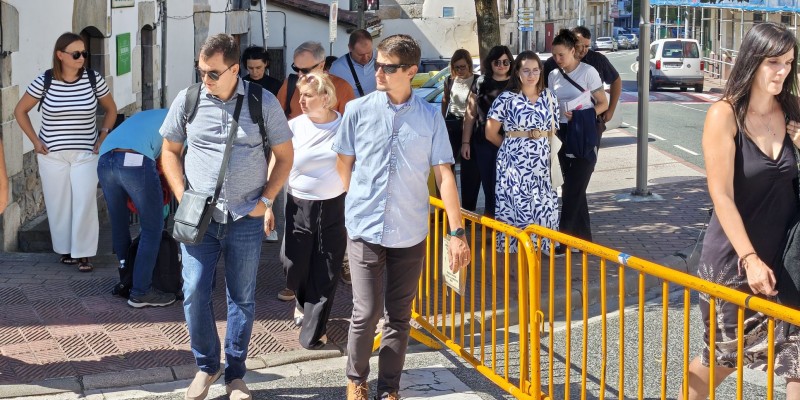
The first day concluded with a field visit to locations in Sakana relevant from a mobility perspective.
Day two – mobility planning and good practices from European regions
The second day was dedicated to moving from the analysis of the current situation towards the concrete planning of mobility measures.
Particular attention was paid to the challenges of developing realistic action plans, balancing the needs of the wider area with the specific characteristics of individual local communities, cooperation between different levels of government, and the possibilities of using digitalisation and artificial intelligence to improve intermodality and social inclusion.
An important part of the programme was the presentation of five good practices by project partners.
The Regional Transport Model of the Podkarpackie Voivodeship was presented as an advanced four-step macroscopic model combining academic knowledge, Big Data technologies, GPS and aggregated mobile network data, as well as artificial intelligence-based video analytics. The model enables the forecasting of traffic flows, testing of infrastructure solutions, and optimisation of public transport.
A representative of the German region of Saarland presented the Saarland Municipal Mobility Network, a regional network bringing together all 52 municipalities and providing support for local capacity development, the training of mobility managers, and the preparation and financing of local sustainable mobility measures.
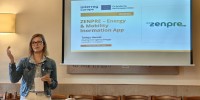
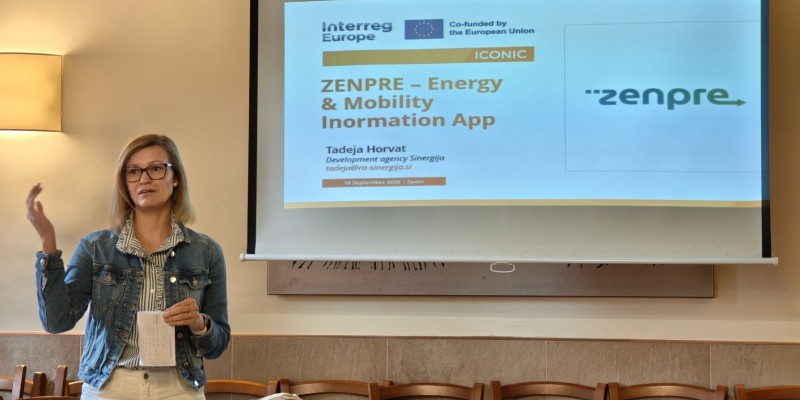
Development Agency Sinergija from Slovenia presented ZENPRE, a free online application designed particularly for groups at risk of social exclusion. The application provides practical information on journey planning, subsidised transport, available benefits, and financial support opportunities.
The hosts from Sakana presented Jaibus, a local programme linking prevention, social services and mobility.
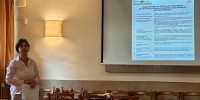
Sarajevo Canton presents good practice in organising school transport
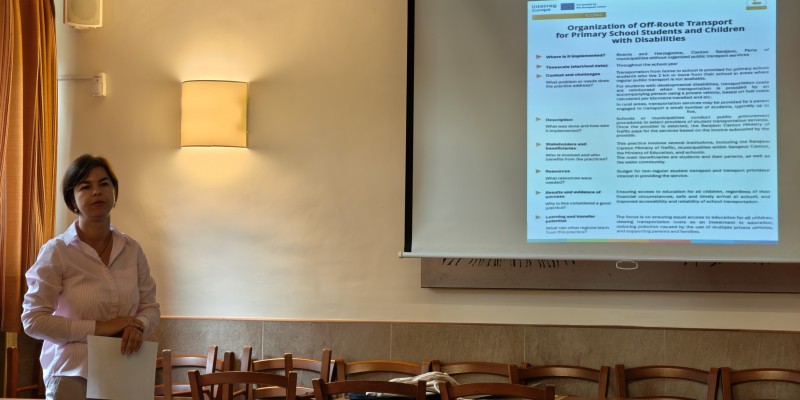
As part of the good practices session, a representative of the Ministry of Transport of Sarajevo Canton, SERDA’s associated partner in the ICONIC project, presented the practice of organising non-scheduled transport for primary school pupils and children with developmental disabilities in Sarajevo Canton.
The presented practice primarily concerns parts of Sarajevo Canton where regular public transport is not available. In these areas, primary school pupils who live two or more kilometres from their school are provided with transport from their place of residence to school. For pupils with developmental disabilities, there is also the possibility of reimbursing transport costs when they are transported by private vehicle by an accompanying person. In rural areas, where the number of pupils is small, transport may also be organised by engaging parents to transport a smaller number of children.
The model involves cooperation between the Ministry of Transport of Sarajevo Canton, the Ministry for Education and Upbringing, municipalities and schools. Schools or municipalities conduct public procurement procedures for the selection of transport service providers, while the Ministry of Transport of Sarajevo Canton finances the service on the basis of invoices submitted by the selected transport operators.
The key results of this practice include equal access to education regardless of place of residence and the financial circumstances of the family, safe and timely arrival of children at school, and increased accessibility and reliability of school transport. At the same time, organised transport reduces the need to use a larger number of private vehicles, thereby potentially contributing to reduced traffic congestion and negative environmental impacts.
This practice is particularly significant in the context of the ICONIC project because it demonstrates how mobility can be approached not only as a transport issue, but also as a social and educational issue, and as an instrument for ensuring equal access to essential public services.
Study visit to Sakana
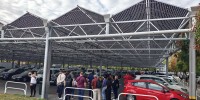
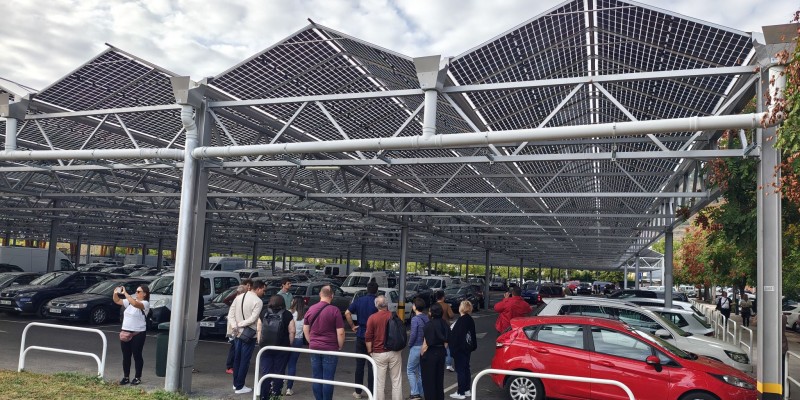
Following the workshop part of the programme, participants visited several locations to gain first-hand insight into sustainable mobility solutions being implemented in the Sakana region.
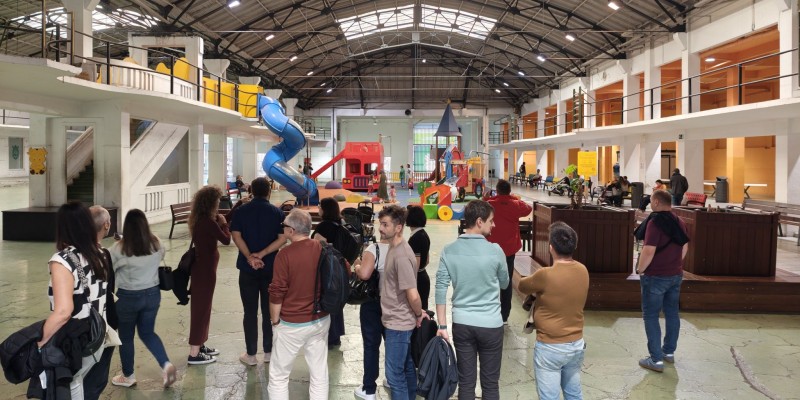
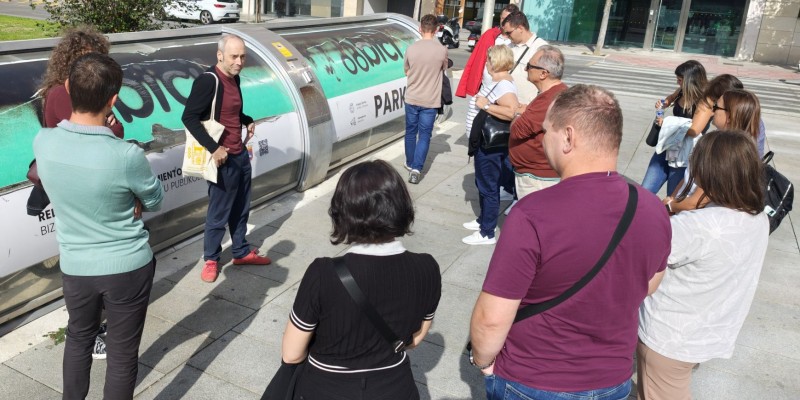
The delegations visited the Sakana cycling route, analysed the accessibility plan for Etxarri Aranatz, and learned about transport hub infrastructure and the design of public spaces in Altsasu.
Day three – project management and urban mobility in Pamplona
The final day of the exchange was dedicated to strategic and organisational issues related to the ICONIC project.
Project partners analysed the progress achieved so far in the areas of communication, monitoring of common indicators, and implementation of pilot activities. Particular attention was given to planned changes to regional policies, the way in which these changes will be monitored and reported, and the possibilities of linking these processes with good practices identified in the partner regions.
Following the evaluation of the three-day programme and the definition of key conclusions, participants visited Pamplona, the capital of Navarre.
During the study visit, sustainable urban mobility solutions were presented, with particular emphasis on the management of pedestrian and cycling traffic and the adaptation of public spaces to more sustainable forms of mobility.
The participation of SERDA and the Ministry of Transport of Sarajevo Canton in the exchange of experience represents a continuation of their joint work within the ICONIC project, through which the experiences of European partner regions are used to improve policies and solutions in the field of sustainable and inclusive mobility in Sarajevo Canton.
The ICONIC project is implemented within the Interreg Europe programme, with SERDA participating as a project partner and the Ministry of Transport of Sarajevo Canton as an associated partner in the project.