Archive

Second national roundtable held within the INFIRE project: Strengthening financial mechanisms for the energy transition
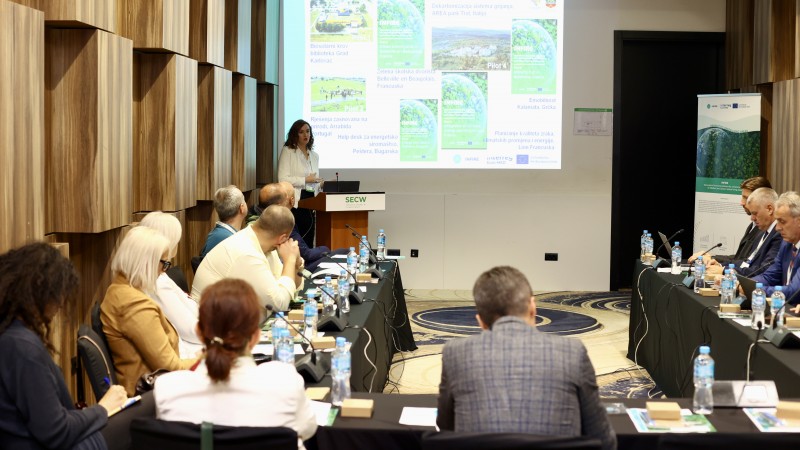
As part of Sarajevo Energy & Climate Week (SECW), the second national roundtable within the INFIRE project was held on 22 September 2026 at Hotel Hills, focusing on strengthening financial mechanisms for the energy transition in Bosnia and Herzegovina.
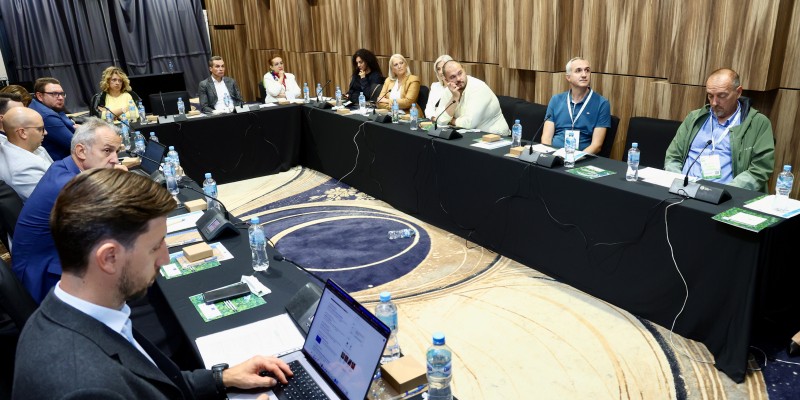
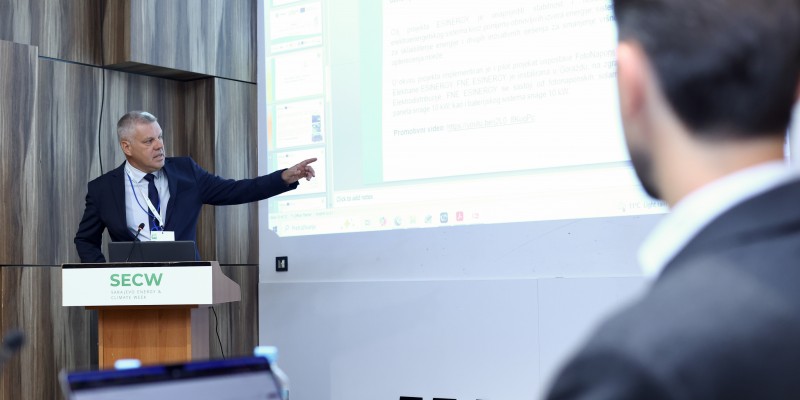
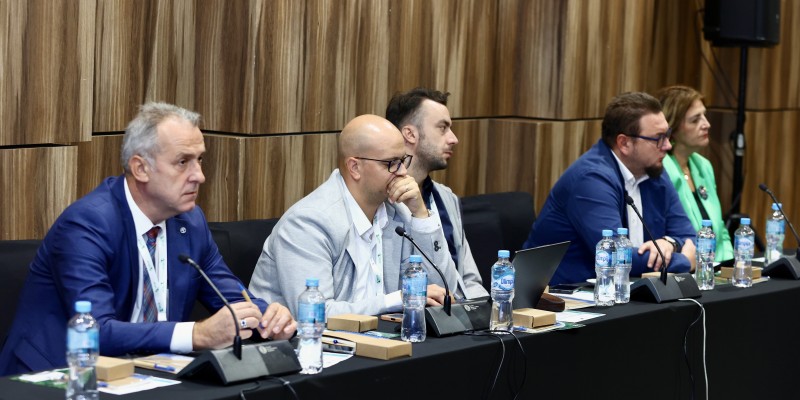
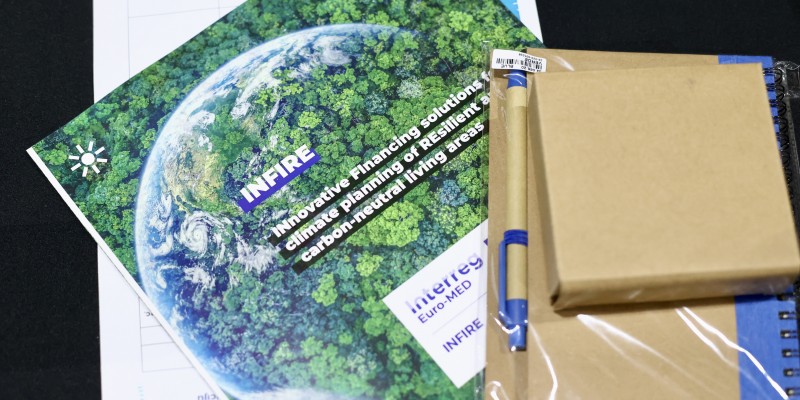
The roundtable brought together representatives of public institutions, the professional and academic community, and other relevant stakeholders with the aim of exchanging experiences and identifying barriers and opportunities for improving the financing of the green and energy transition.
The INFIRE project, its key activities, and the role of financial institutions and policymakers in creating more favourable conditions for investment in the energy transition were presented. Participants were addressed by Admir Softić, Assistant Minister at the Ministry of Foreign Trade and Economic Relations of Bosnia and Herzegovina, who highlighted the importance of creating a more favourable environment for investment in the green transition and mobilising different sources of financing.
SERDA’s experience and concrete solutions
As part of the programme, SERDA’s experience in developing and supporting solutions for the energy transition was presented, including the Energy Efficiency Model in Sarajevo Canton and ESINERGY, as well as its experience in connecting the public and private sectors, financial institutions, and other relevant stakeholders.
From barriers to new financing solutions
The central part of the roundtable was dedicated to a discussion on key barriers and market needs. Participants discussed access to financing, existing financial instruments, regulatory and administrative barriers, financing criteria and procedures, as well as the need to develop new and tailored financial solutions.
Particular attention was paid to the possibilities of applying different models that can facilitate the financing of investments in the energy transition. In this context, participants discussed ESCO models, which enable the implementation of energy efficiency measures through financing models based on achieved savings, as well as the potential use of green bonds as an instrument for mobilising capital for projects with a positive impact on the environment and climate resilience.
Public-private partnership (PPP) models were also considered as a potential mechanism for implementing infrastructure and energy projects, particularly in situations where public resources, private capital and expertise need to be combined. The discussion also covered digitalisation and the simplification of procedures, the combination of public and private sources of financing, and the development of concrete pilot solutions that could respond to market needs.
Energy communities were another topic of discussion, as a model that can enable more active involvement of citizens, local communities, public institutions and other stakeholders in the production, use and management of energy from renewable sources. Participants considered financing opportunities for such initiatives and their potential to increase local energy independence and accelerate the energy transition.
Digitalisation and combining sources of financing
The second part of the discussion focused on opportunities to improve existing mechanisms and develop potential new financial instruments. Participants discussed digitalisation and the simplification of procedures, the combination of public and private sources of financing, as well as opportunities to develop concrete pilot solutions.
Particular emphasis was placed on the need to better connect different sources of capital and create financial models capable of responding to the specific needs of the public sector, local communities and private investors. The roundtable thus served as a platform for exchanging experiences and connecting different stakeholders around a common goal – creating a more efficient and accessible system for financing investments in the energy and green transition in Bosnia and Herzegovina.
The conclusions of the roundtable will provide important input for the continuation of INFIRE project activities, particularly in identifying priority needs, financial and institutional barriers, and potential solutions. The roundtable confirmed the importance of continuously connecting the public sector, financial institutions, businesses, academia, and other relevant stakeholders with the aim of developing more accessible and innovative models for financing the energy transition.
Through the activities of the INFIRE project, SERDA will continue to contribute to the development and promotion of solutions that can support and accelerate the green and energy transition in Bosnia and Herzegovina.